Narrative Design Portfolio
I bring an attention to detail to my narrative design work. I am the kind of player who spends hours looking at palace art in Resident Evil 4, keeps tracks of copies of the book A Jade in Austin in The Last of Us (pre-remake), and saves screenshots of Circe’s poetic potions in Hades 2. At the end of Plague Tale: Requiem, before the final irrevocable encounter, the player/Amicia can take a small detour and pick up a pink flower. This remarkable narrative moment invites the player to pause and reflect before they enter the game’s final battle. I think about all of the work that went into making this scene happen: the creation of code, art assets, level design, a dialogue system, a collection mechanic. Video games have an extraordinary capacity to tell bold stories that capture the fullness of the human experience, but anchoring these stories are the “unhistoric acts” that shape human lives, the ones that history books do not record.
Unhistoric acts, a phrase I am borrowing from George Eliot, belong to the realm of dreaming, imagining, conjuring, possibility, and transformation. We can think of them as encompassing everything that is not part of the player’s main mission; namely, the inconsequential assets, interactions, and events that nonetheless form the deep tissue of the gameplay experience. Ideally, narrative design is present at the beginning of the game development process, but regardless of the stage at which they are brought on board, a narrative designer needs to have a broad understanding of how games are made. The more I know about this process—from programming to 3D modeling—the better equipped am I to find a place for the story whether this happens to be on the critical path or in a hidden corner where a single flower blooms.
Tools: Unity, Twine, Ink, Pixel Crushers, Yarn Spinner, Excel, Inform 7, Procreate, Photoshop
Dream Collaboration: Narrative game designer for a combat-heavy roguelike (cf. Returnal, Hades 2)
As the narrative designer for HEL10S (Unity, Pixel Crushers) I was responsible for coordinating the NPC dialogues, cutscenes, and environmental prompts. It was my job to ensure that the game’s puzzles and combat scenes integrated with the main story. Every game loop requires that you take the absurd psychological evaluation that I authored.
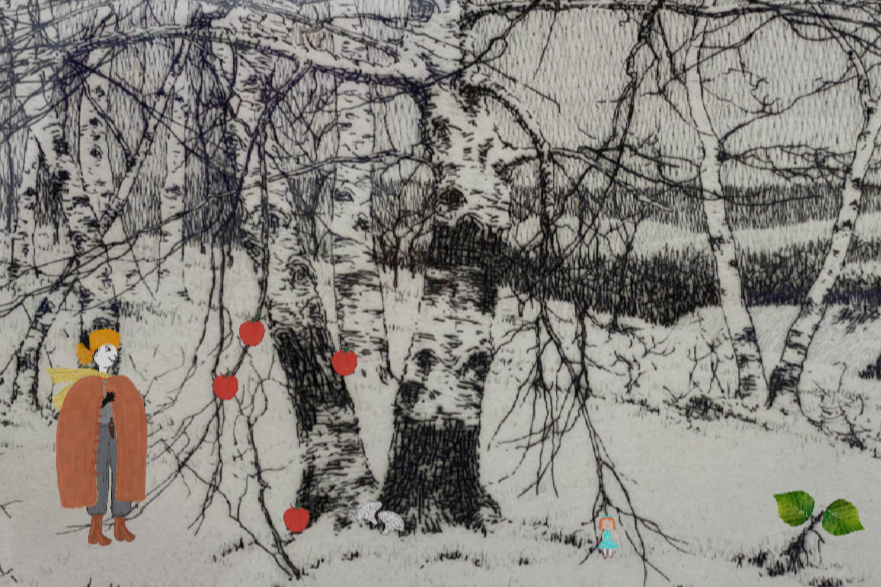
Vya (Unity, Yarn Spinner) is a single-player narrative adventure game that reimagines Dante’s Inferno as the story of a middle-aged woman. The story includes multilingual branching dialogues, interactable assets, a memory inventory, and even a typing game.
Made in Inform 7, “Corvus” is a work of interactive fiction about grief and regret. It features a NPC who echoes back the last words the protagonist says creating the uncanny semblance of a two-way conversation.
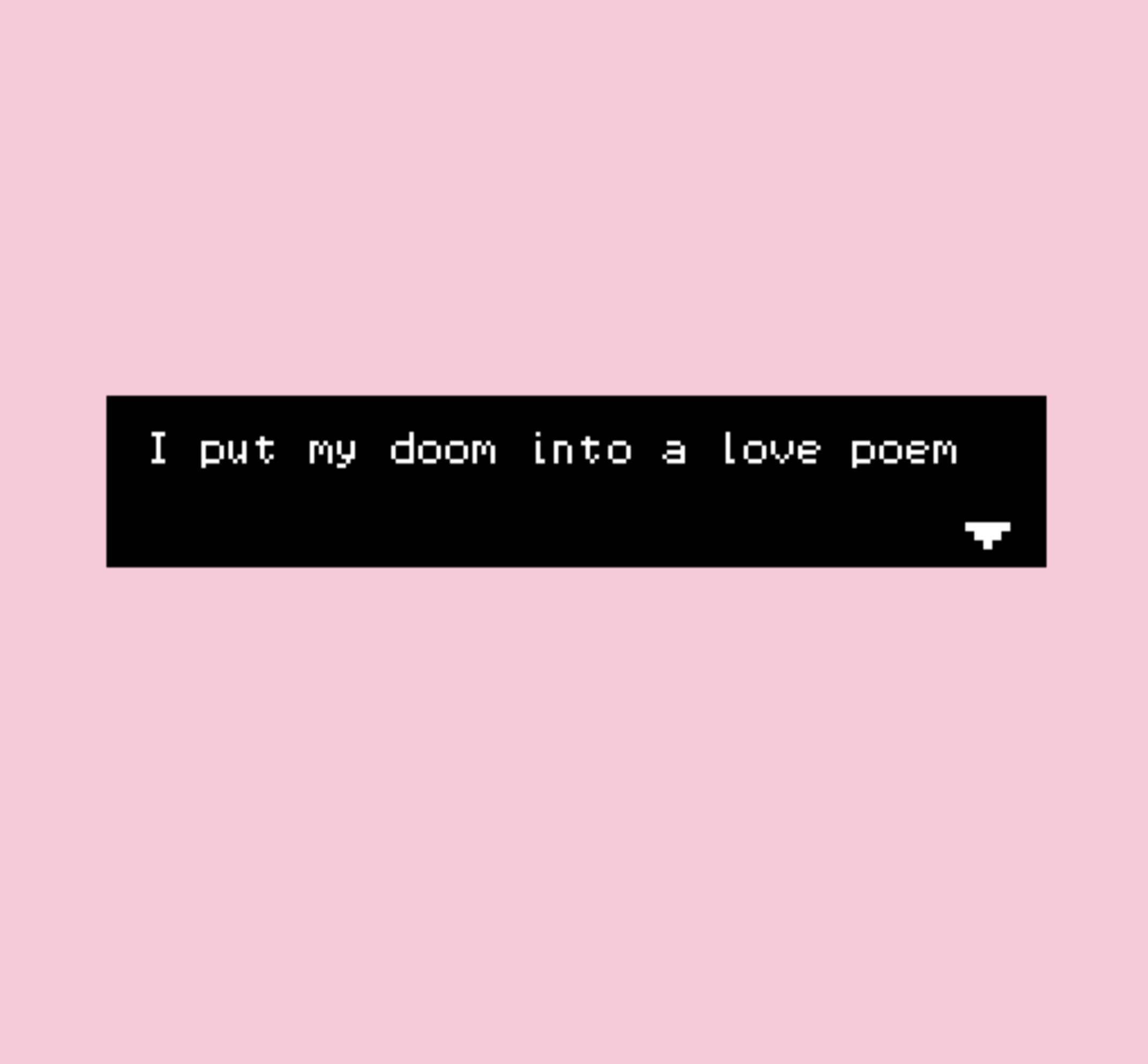
“I put my doom into a love poem” adapts my own poems, adding a degree of interactivity that isn’t possible when words are fixed on a page/screen. Made in Bitsy, I call this a “poem game,” a category that reflects my way of thinking about the different forms poems and games can take and where the line distinguishing one from the other blurs.